Patent Strategy: i4i and Microsoft
 Patent enforcement and defence strategy often involves a coordinated approach, including patent infringement litigation, patent reexamination before the USPTO, and complaints filed with the International Trade Commission, a U.S. trade panel that can ban importation of infringing goods. Â
The i4i suit against Microsoft provides a good case-study. In its long-running patent infringement dispute against Microsoft, the Canadian tech company i4i has won another battle (though the war is far from over). Microsoft challenged the vailidty of i4i’s patent, and the USPTO recently upheld the patent’s validity.
Microsoft appealed the original trial decision, and that appeal was dismissed. Microsoft filed another appeal for a en banc re-hearing, and that appeal was dismissed. The options are now to pursue the appeal up to the US Supreme Court, or appeal the USPTO’s reexamination decision.
Related Posts:
Calgary – 09:00 MT
No commentsOutsourcing Your Email to Google? Privacy Laws Apply
Planning on outsourcing your company’s email to Gmail? Or maybe you’re outsourcing your data storage to a server in the US? Recent changes to Alberta’s Personal Information Protection Act (PIPA) stipulate that organizations must notify people when they will be transferring personal information to a service provider outside of Canada. Take the example of the University of Alberta’s recent plan to use Google as an email provider (though as public body the university falls under FOIP, not PIPA). Such a change involves the hosting of personal information outside of Canada. In the case of online transactions, which necessarily route credit-card clearing services through the US for approval purposes, there appears to be an exception.
The other major changes include breach reporting and notification obligations, which are a first in Canada. This means that, if a privacy breach occurs and it creates “a real risk of significant harm†to an individual, the organization must make a report to the Privacy Commissioner.Â
The changes became law on May 1, 2010. Information about the amendments and how they work is available at: www.oipc.ab.ca.
Calgary – 08:00 MST
No commentsIndustrial Design in Canada & US
 Industrial design is often overlooked while its flashier cousins – patents, copyright and trade-marks – hog the spotlight. In both Canada (which uses the term industrial design) and the US (which refers to a design patent), this category of intellectual property only provides protection for ornamental and not functional aspects of the design of the article. In the recent US Federal Circuit Court of Appeals decision in Richardson v. Stanley Works, Inc., No. 09-1354 (Fed. Cir. Mar. 9, 2010), the court reviewedÂ
Industrial design is often overlooked while its flashier cousins – patents, copyright and trade-marks – hog the spotlight. In both Canada (which uses the term industrial design) and the US (which refers to a design patent), this category of intellectual property only provides protection for ornamental and not functional aspects of the design of the article. In the recent US Federal Circuit Court of Appeals decision in Richardson v. Stanley Works, Inc., No. 09-1354 (Fed. Cir. Mar. 9, 2010), the court reviewed 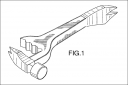 two design patents claiming an ornamental design for multifunction carpentry tools. Stanley, the owner of the “Fubar” tool (shown left)was sued by Richardson, the owner of the “Stepclaw” tool (shown right) . The Court was clear that the patented design is for a multi-function tool that has several functional components, and that “a design patent, unlike a utility patent, limits protection to the ornamental design of the article.” The Court found that the only similarities between the two tools were those of unprotectable functional elements, and thus no infringement occurred.
Calgary – 07:00 MST
No commentsSlide to Unlock: Apple’s Trade Secrets (Part 2)
Â
You may have seen our recent post on the subject of Apple’s robust trade-secret protection program. Apple grabbed headlines again when a prototype iPhone made its way into the hands of a blogger at Gizmodo, who promptly posted a review of it. It didn’t take long for Apple to flex its trade-secret enforcement tools. The “Rapid Enforcement Allied Computer Team” (a uniquely Californian computer-crime task force) descended on the blogger and reportedly seized a number of items including a laptop, hard-drive and other personal effects. The message is unmistakeable: technology companies will go to extraordinary lengths to protect trade-secrets.
Could this happen in Canada? Search warrants are typically used where a criminal investigation is under way. In civil cases, a technology company could use an “Anton Piller Order”, which is a form of civil search warrant enabling representatives of a plaintiff to search the defendant’s premises and seize relevant documents and other evidence pertinent to the lawsuit. It comes from a trade-secret lawsuit from the 1970’s, where a technology company convinced the court to permit a search-and-seizure at the defendant’s premises. Such an order can only be granted where:
- there is a strong case for the plaintiff and the potential for “very serious” damage to the plaintiff;
- there is convincing evidence that the defendant has “incriminating documents or things”; and
- there is a real possibility that the defendant might destroy the incriminating evidence.
These orders can be set aside, as in this recent Federal Court case involving a copyright infringement claim: Vinod Chopra Films Private Limited v. John Doe, 2010 FC 387 (CanLII).
Calgary – 08:00 MST
Â
No commentsACTA & Copyright Reform in Canada
 What does an international treaty have to do with ripping songs to your iPod?  You may not have heard much about the Anti-Counterfeiting Trade Agreement (ACTA), but this international treaty may have significant impacts on the domestic copyright reform process in Canada. ACTA is an international round of trade negotiations that addresses counterfeiting, which in turn deals directly with copyright infringement. The draft text of the agreement was released last week.Â
Copyright infringement – what it means, when it occurs, who is responsible, and what penalties should be levied – is central to the anticipated reform of Canada’s Copyright Act. The government has again hinted that it will introduce a copyright reform bill  in this session of Parliament. The related debate about iPod levies should also be addressed in the reform process. Â
There is little doubt that ACTA will play an important role in influencing domestic copyright policy. In this environment of international pressures, intense lobbying, proposed levies, and heightened public awareness of copyright issues, the government will have a hard time pleasing everyone as it navigates this intellectual property minefield. Even if proposed legislation is introduced this spring, the bill will die if there is a fall election.Â
Federal elections? That’s one little detail that ACTA need not worry about, and the treaty is expected to be finalized by the end of 2010.
Calgary – 08:00 MST
No commentsPatent Marking: Update for Canadian Patent Owners
Do you have a patent in the US or are you a licensee of a US patent? Are your products marked correctly?
Canadian patent owners should review patent marking requirements in the US, in light of the recent Forest Group decision (Forest Group, Inc. v. Bon Tool Co., 590 F.3d 1295 (Fed. Cir. 2009)). This decision has reinterpreted the false marking provisions of U.S. patent law to expand the fines that can be imposed on patent owners and their licensees. If an article is falsely marked with an incorrect patent number, the fine can be up to $500 for each falsely marked article. An article is falsely marked, for example, if the patent number is incorrect, or if there is a false suggestion that a patent is issued or pending, or a false claim that a particular issued patent covers the product. Â
The U.S. law permits anyone to sue for the penalty and split any award with the federal government, so this has become another strategic tool in the marketplace. Since the December 2009 decision, competitors have been scrutinizing (and suing) each other to determine if there is any basis for a false-marking suit. Â
Canadian patent owners, licensees and manufacturers are advised to obtain advice to review their internal patent-marking policies, and to review the terms of patent license agreements to address patent-marking obligations.
Related Event: See our Events page (link to the right)
Calgary – 10:00 MST
No commentsBusiness Method Patents: Amazon Clicks Through
Many companies in Canada and the US are waiting for clarity on the software and business-method patent debate.
- In the US, we’re watching the proposed Patent Reform Act of 2010,
- A ruling from the US Supreme Court is expected on the Bilski appeal ;
- In Canada, we’re waiting for the decision in the Federal Court appeal of the Patent Appeal Board’s rejection of Amazon’s 1-click patent, andÂ
- CIPO has announced that it will introduce MOPOP amendments relating to Computer implemented inventions.
Patent offices on both sides of the border are issuing rejections, but one (in)famous software patent has been re-examined and upheld. The USPTO recently completed in lengthy review of Amazon’s controversial 1-click patent and confirmed the patentability of many of the original claims. Amazon has avoided the defeat of a re-examination and rejection and has in fact emerged with a narrower but arguably more defensible set of claims. This is good news for Amazon, but does little to settle the wider debate, since the 1-click patent has become a poster-child for patent reform, and this decision merely fuels the debate further. The patent is set to expire in September, 2017. Â
Calgary – 07:00 MST
No commentsGoogle AdWords: Can’t Beat ‘Em?
Google generates serious revenue ($20 billion+)Â from its AdWords program and “Keyword Suggestion Tool”. Yahoo! has its equivalent Sponsored Search service, and so does Microsoft through Bing Search Advertising.
All of these internet advertising services allow advertisiers to buy “keywords” to appear in online ads within sponsored search results. Advertisers can buy words, phrases, or even a competitor’s trade-mark to ensure that their ads appear in the sponsored results. This practice is common… and so is the frustration of brand owners when they Google their own brand and then see competitor’s ads popping up. If you’re one of those brand owners, what can you do about it? If Rescuecom’s experience is anything to go by, then the answer might be … if you can’t beat ’em, join ’em.
Rescuecom’s attempt to sue the mighty Google (Rescuecom Corp. v. Google, Inc., 562 F.3d) achieved some success – a US appeal court determined that Rescuecom could proceed with its trade-mark infringement lawsuit based on the sale of Rescuecom as a “keyword”. But Google (predictably) fought back tooth-and-nail, and Rescuecom recently dropped its suit altogether. Now, it is Rescuecom that is in trouble for its own AdWords use of a competitor’s mark: Best Buy’s “geek squad”.   Rescuecom is trying to convince the court that its use of a competitor’s mark in AdWords is legitimate.  Everyone else is buying up their own brands as keywords, to prevent competitors from getting there first.
Meanwhile, Google continues to cash cheques.
Related Reading: a list of current AdWords Lawsuits
Calgary – 10:00 MST
No commentsIP Infringement & Director Liability
 A popular Chinese night market in a suburb of Vancouver became the arena for an intellectual property infringement case involving trade-marks and copyright.Â
In a recent Federal Court decision (Target Event Production Ltd. v. Cheung and Lions Communications Inc., 2010 FC 27), Target, the original operator of the Richmond night market, sued a rival event operator for infringing on the registered mark RICHMOND NIGHT MARKET (in English and Chinese), as well as infringing copyright in the layout and site plans for the night market. One important element in the decision relates to the distinctiveness of the marks.Â
The Court acknowledged that the marks including RICHMOND NIGHT MARKET were “originally merely descriptive” but over time they became “valid trademarks because they enjoyed substantial goodwill and had acquired distinctiveness…” But the judge went on to say that “this acquired distinctiveness was not, in my view, durable. Once Raymond Cheung and Target failed to open a night market in 2009, it is my view that Target’s Names, which were inherently weak, lost their distinctiveness and the associated goodwill.”
The lessons for business?Â
- Weak, descriptive marks can acquire distinctiveness over time through advertising and use, but that distinctiveness can easily be lost.  Unique, distinctive marks will always be much stronger and easier to protect.
- Remember: directors can be liable for infringement. In this case, the director of the defendant company was personally liable for the infringement since he was aware of the copyright and still went ahead with the unauthorized copying. As described in the well-known case Mentmore Manufacturing Co. v. National Merchandise Manufacturing Co., a director will be liable where there is “deliberate, wilful and knowing pursuit of a course of conduct that was likely to constitute infringement or … an indifference to the risk of it.”
Calgary – 10:00 MST
No commentsUS Jurisdiction over Canadian Sites
Does a US judge have jurisdiction over a website operated in Canada? The answer is found in a recent US court decision involving a Canadian website operator (Columbia Pictures Industries Inc. v. Fung ).Â
In that case, the Motion Pictures Association of America sued Gary Fung, operator of IsoHunt (a popular BitTorrent site). Mr. Fung’s web sites were all hosted in Canada but the US court had no trouble establishing it could extend its ruling to cover Mr. Fung and his activities. The MPAA convinced the court that infringement had taken place within the US. From there, it wasn’t a leap to tag Mr. Fung with liability under the US theories of “inducement, material contribution, and vicarious infringement”, even though Mr. Fung’s conduct occurred outside the US.
The court said that “United States copyright law does not require that both parties be located in the United States. … Plaintiffs need only show that United States users either uploaded or downloaded copyrighted works; Plaintiffs need not show that a particular file was both uploaded and downloaded entirely within the United States.â€
Last year, Mr. Fung, through his company isoHunt Web Technologies Inc., attempted to launch a pre-emptive strike against the recording industry by seeking a declaration that its operations did not violate the Copyright Act. No final ruling has been issued in that case.
Related Reading:Â Canadian P2P Copyright Battle Continues
Â
Calgary – 09:00 MST
Â
No commentsTrade-marks for Small Business
Calling all small business owners. Remember that nagging feeling that you should get a handle on your brands and trade-marks? Here’s a local cautionary tale that illustrates why trade-marks are critical for small business. A popular chain of Calgary eateries has been trading under the name NELLIE’S for years. Last month, the 5-restaurant chain was cited for highly publicized health code violations.  The problem? Another local eatery, also trading under the name NELLIE’S, but independently owned and operated, is now caught up in the bad press, even though it had no violations.   Â
Lessons for business? There are many reasons to protect your brand, and this is just one of them. A unique, distinctive brand that sets you apart from the competition, will help avoid “guilt by association” and will help your business become stronger and more valuable. Contact us to review options and strategies for trade-mark protection.
Â
Calgary – 09:00 MST
No commentsSlide to Unlock: Apple’s Trade Secrets
Â

The Apple rumour mill – which usually spins at an alarming rate even on a slow day – has been at risk of popping a gasket over the past few months with speculation over Apple’s latest product release: a tablet-like device which is expected to do to the handheld tablet category what the iPod did for MP3s. The iPad product was released today.
The new product was described in great detail by those who had no idea what it looked like, what it was called or what functionality or interface it might have. This attests to two things: the marketing power of consumer expectations, and the strength of Apple’s trade secret and intellectual-property protection program. Several years ago Apple sued a journalist who posted information about one of Apple’s forthcoming software products (in O’Grady v. Superior Court, 139 Cal.App.4th 1423 (Cal.App. 2006)). Apple sought an order forcing the journalist to disclose his sources. In the most recent round of speculation, the company’s lawyers fired a letter at a Silicon Valley gossip site when the site offered a $100,000 bounty for any photos of the tablet. Ultimately Apple lost its legal battle with the journalist, but the practical message was clear: that it takes its confidential information very seriously.
Calgary – 07:00 MSTÂ
No commentsIntellectual Property & Agriculture
In the 1990s, researchers at the University of Saskatchewan developed a transgenic variety of flax known as CDC Triffid, which was genetically designed to be herbicide-resistant. The crop received regulatory approval in the mid-1990s, but was never adopted by Canadian farmers for commercial use, because of fears that its use would close export markets such as the European Union, which has a zero-tolerance for GMO foods.
Those fears have now materialized. The flax industry is scrambling to discover why CDC Triffid seeds appear to have propogated in Western Canadian flax fields, despite having been “decommissioned” fifteen years ago. This story has all the makings of a science-fiction tale (indeed, the name of the crop comes from a sci-fi novel about carnivorous plants). The intellectual property issues are also interesting, since the original research would have produced an invention subject to intellectual property rights – likely patentable in the same way that the transgenic crops developed by Monsanto and others have been patented (though there is no indication that CDC Triffid was ever the subject of a patent).
The most recent case where Monsanto enforced its patent rights over a farmer was in the 2009 case of Monsanto Canada Inc. v. Rivett, 2009 FC 317 (CanLII), where a farmer was hit with a damage award for his unauthorized use of Monsanto’s patented canola seeds. In that case, the court reviewed the concept of the “innocent user” who finds a patented higher life form has “escaped” and started growing on his land. As noted in Infringement of Patent on Higher Life Form “Life forms have a way of getting up and moving around: seeds propagate and blow away, creatures crawl, viruses replicate and invade.” The Triffid case is a perfect illustration.
Calgary – 07:00 MST
No commentsCleanTech Funding Opportunities
–
Clean technologies continue to be a significant source of investment capital in 2010. Provincial governments in Canada are looking for ways to attract and retain both the investment dollars as well as the technical and business expertise that flows from those investments.
The Alberta government is accepting applications in the field of bio-energy infrastructure development in connection with a $239 million fund it has established for biorefining. Industry Canada’s database of funding opportunities is listed here.
Contact us for strategic advice on financing, corporate services, and intellectual property protection.
Calgary – 09:00 MST
No commentsAnother Microsoft Appeal in i4i Case
The court injunction preventing infringing sales of Microsoft Word (see: Microsoft Loses Patent Appeal) went into effect on Monday. While the company says it is complying with the court order, MS has submitted another appeal in the patent infringement case, asking a panel of 11 judges of the US Federal Circuit Court of Appeals to review the case and quash the original judgment.
Typically, appeals are heard by a three-member panel. Microsoft already tried that and lost in December, 2009.  Any review of a decision of the US Federal Court of Appeals should properly be made to the US Supreme Court, but Microsoft’s latest tactic is referred to as an “en banc rehearing”, a type of review at the Federal Court of Appeals level which can be permitted for “precedent-setting questions of exceptional importance”. The court will decide if this question qualifies for such a rehearing, and if not, then Microsoft will likely take the appeal up to the Supreme Court.
Calgary – 9:00 MST
No commentsAmbush Marketing: The Names That Cannot Be Spoken… (Part 1)
2010. Winter. Games.  As the 2010 Olympics reach a frenzied pitch in Vancouver, the contests on the ice and snow will be matched by brand battles on billboards and posters. You will recall that in Beijing, the “Brand Police” (see: Olympics and the Trade-Mark Police) covered up offending trade-marks with duct tape. Not just in Olympic venues, but throughout the city. Such practices have now come to Canada, where Olympic volunteers risk having their shoes and t-shirts swaddled in duct tape to cover up the brands of companies who are not official sponsors.Â
Some retailers have danced close to the line (such as Lululemon’s famous dig at Olympic brand-control), and some knock-offs have been caught when they stepped over the line.
When VANOC assesses whether a product or advertisement offends the Olympic brand they look at the following factors. Essentially, they will be looking to see if the use of the Olympic marks falsely creates the impression of a business association with the Olympics.
- Factually accurate use: When the Olympic brand is used, is it used accurately and without distortion or modification?
- Relevant use: VANOC is less likely to object if the use is relevant to a larger storyline and isn’t so gratuitous or disproportionate that it creates the impression of a business association with the Olympics.Â
- Commercially neutral: VANOC is less likely to object if the brand is used in a commercially-neutral manner that does not create the impression of a business association with the Olympics.Â
- Undue prominence: How much prominence is given to the brand? Â
- Use of Olympic or Paralympic visuals: Use of Olympic visuals in connection with a business  – logos, archival Games images, team uniforms or Olympic medals – is a red-flag for VANOC.
- Unauthorized association: This is a catch-all category – VANOC will look at surrounding circumstances such as the timing and strategic placement of the advertising in question.
Companies wishing to publish last-minute advertisements in the lead-up to the 2010 Games are encouraged to seek advice before they go to print with ads, signage or product packaging. It is worth noting that Lululemon, though they were publicly scolded by VANOC, has not been met with any other threats or cease-and-desist letters. So they appear to have found the line, and stayed on the right side of it.
Related Reading: Olympic Lawsuits, Our Trademark Anthem
Calgary – 09:00 MST
No commentsGoogle, Apple, Nokia… Let the Litigation Begin!
 Apple launches a cellphone. Nokia releases a laptop. Apple buys an online advertising division and Google moves aggressively into software and hardware. With the release today of Google’s nexus one phone, which positions itself as an iPhone competitor, the ongoing battle for the smartphone market heats up another few degrees.Â
Nokia and Apple are already locked in patent litigation with each claiming the other has infringed its portfolio of patents. Nokia raised the stakes when it broadened its legal attack to include all of Apple’s popular iMac desktops as well as the iPhone. Meanwhile, with the release of Google’s branded nexus one phone (manufactured by HTC), the search-engine titan elbows into the cellphone market with its own Android-based device. Android apps will compete head-to-head with iPhone apps. In the midst of all this market positioning, intellectual property litigation is one more tool; it is reminiscent of the battle in the late 1980s when Motorola effectively declared war on upstart Nokia and used patent infringement as its main weapon. It also recalls the use of copyright in the turf wars between Apple and Microsoft in the 1990s.Â
The lessons for business? Don’t ignore the value of intellectual property protection as both an offensive and defensive tool. If you don’t know where to start, then obtain an intellectual property audit and come up with a budget and a list of priorities.
Calgary – 15:35 MST
No commentsIP and Internet Law in 2010
2009 was a fascinating year in the world of intellectual property and internet law. Here are a few issues to watch in 2010:
Olympic Marks: Â The next few months will focus attention on the uses and abuses of both Olympic marks, as well as the Olympic and Paralympic Marks Act.Â
Canadian Copyright Reform and Anti-Spam Law: The Canadian copyright reform process has stalled yet again. The government undertook a public consultation process in the fall but any prospect of movement on this issue has again died in the wake of Parliament’s prorogation. This also applies to proposed anti-spam legislation that died on the order paper. Political pundits are speculating about a fall 2010 election, and if that happens, we won’t see any developments in copyright reform or anti-spam laws until 2011 at the earliest.
US Patent Reform: As we predicted in IP & Internet Law in 2009, a proposed patent reform bill was introduced early in 2009, but since then, the patent reform process in the US is stalled. House and Senate bills are inching through Congress.
The Development of App Law: The surprise of 2009 was the rapid development of app law – the law of mobile applications. This trend can be expected to continue as legal disputes help clarify the law in this growing area.
Copyright Class Action: Though this lawsuit was commenced in 2008, it has the potential to become headline news in 2010 if it proceeds through the courts – it’s the ghost of Chet Baker vs the Recording Industry in a copyright claim for unpaid royalties (see: Canadian Copyright Class Action… Against the Recording Industry).
Business Method Patents: In both Canada and the US, the patentability of business methods is being contested, and a decision in the Bilski case (in the US), as well as an appeal of the rejection of the Amazon 1-click patent (in Canada) should come in 2010. We can finally expect to get some clarity in this area.
Calgary – 11:45 MST
Â
No commentsMicrosoft Loses Patent Appeal
On Tuesday, Microsoft lost at the U.S. federal court of appeals in a landmark case that will force the software maker to redesign its flagship word-processing program. The US appeal court upheld a $290-million US judgment against Microsoft in the patent battle launched by Canadian company i4i Inc. The injunction comes into effect in January to stop sales of Microsoft Word software which infringes i4i’s software patent for XML editing. Microsoft claims it is reviewing its legal options.
Calgary – 09:00 MST
No commentsUpdate on Trade-marks
A few trade-mark stories are worth noting: Trade-mark Opposition is a process where one brand owner can oppose the trade-mark application of another. Take these two recent examples which illustrate why you need good advice when arguing your case before the Trade-marks Opposition Board (TMOB):
- PIZZA SPOT vs WHITE SPOT: the owners of the well-known White Spot chain of restaurants opposed the application for the mark PIZZA SPOT for restaurant services, citing its family of 17 registered WHITE SPOT marks; the TMOB decided that PIZZA SPOT would not be confusing with WHITE SPOT for identical services; there is a low degree of distinctiveness for the word SPOT, and so the mark PIZZA SPOT was permitted to proceed (White Spot Limited v. Mazzaruss Inc., 76 C.P.R. (4th) 385 (T.M.O.B.));
- SEA MILES vs AIR MILES: what appears to be a similar case resulted in the opposite conclusion. The owners of the AIR MILES brand challenged the application for the trade-mark SEA MILES for identical services (travel rewards programs). The AIR MILES owner cited its family of 27 registered AIR MILES marks. The TMOB concluded there is a high degree of resemblance between the marks, and refused the application for SEA MILES (Air Miles International Trading B.V. v. Sea Miles LLC, 76 C.P.R. (4th) 369 (T.M.O.B.)).
Why the difference? In making their arguments, AIR MILES submitted substantial evidence of use and advertising, and built up their case for their family of “MILES” marks. In the WHITE SPOT case, the evidence wasn’t clear that there was a family of “SPOT” marks, though evidence was tendered to support the use and advertising of the WHITE SPOT mark.   Â
An update to our post on the The Great Olympic Sweater Debate: the Cowichan Tribes have reached a settlement with VANOC in a licensing deal that permits sales of genuine Cowichan sweaters in Vancouver alongside the Olympic brand. Although the Cowichan band likely did not have an arguable case under intellectual property law, they did have a good argument in the court of public relations. A quick resolution attests to VANOC’s desire to avoid negative headlines in the run-up to the games.Â
Calgary – 09:00 MST
No comments
